
Presenter:Prof. Dr. Anna Ermakova(Hasselt University and Royal Belgian Institute for Space Aeronomy)
Topic:Diamond-based Quantum Sensors for Soft Matter Studies
Time:2:00 pm on July 31st (Friday)
Location:909-B
Abstract::
Diamond hosts more than 500 optically active defects, commonly known as color centers. Among the most widely studied are the nitrogen-vacancy center (NV) and group-IV vacancy-related centers, such as SiV, GeV, SnV, and PbV. These systems are being explored for a broad range of applications, from quantum computing and quantum communication to quantum sensing. In this seminar, I will focus on the sensing capabilities of diamond color centers, with particular emphasis on their use in nanodiamonds.
Fluorescent nanodiamonds are highly stable optical markers that, unlike organic dyes or quantum dots, do not bleach or blink. This makes them especially attractive for long-term monitoring. At the same time, this photostability can be a limitation for certain high-resolution imaging techniques based on photoswitching, such as PALM or STORM.
Although the optical resolution is still limited by the diffraction limit of confocal microscopy, sensing itself can be performed with high spatial localization, since nanodiamonds probe physical parameters in their immediate nanoscale environment. The most advanced sensing protocols are currently based on magnetic-field and temperature detection. Magnetic fields can be detected directly using NV centers through optically detected magnetic resonance (ODMR), where the resonance lines split due to the Zeeman effect. Alternatively, NV-spin relaxometry can be used to detect magnetic noise. Temperature sensing is well established for both NV and SiV centers and, because of the small size of nanodiamonds, can be performed inside living cells for local thermal imaging.
In our current research, we are exploring new directions for applying diamond-based quantum sensing to soft matter systems. Conventional ODMR and relaxometry protocols require laser excitation combined with a microwave field at frequencies around 2.8 GHz, depending on the applied magnetic field. However, microwave excitation can introduce parasitic heating, which is particularly important for biological tissues and water-containing materials. To minimize this effect, we are developing microwave-free sensing methods for nanodiamond-based experiments. In particular, we investigate sensing near-zero magnetic fields without microwave excitation. This approach relies on interactions between NV centers and other paramagnetic defects in the diamond lattice, including other NV centers and single substitutional nitrogen defects.
Different sensing protocols, with a particular focus on soft matter studies, will be presented and discussed in detail during the talk.
Biography:
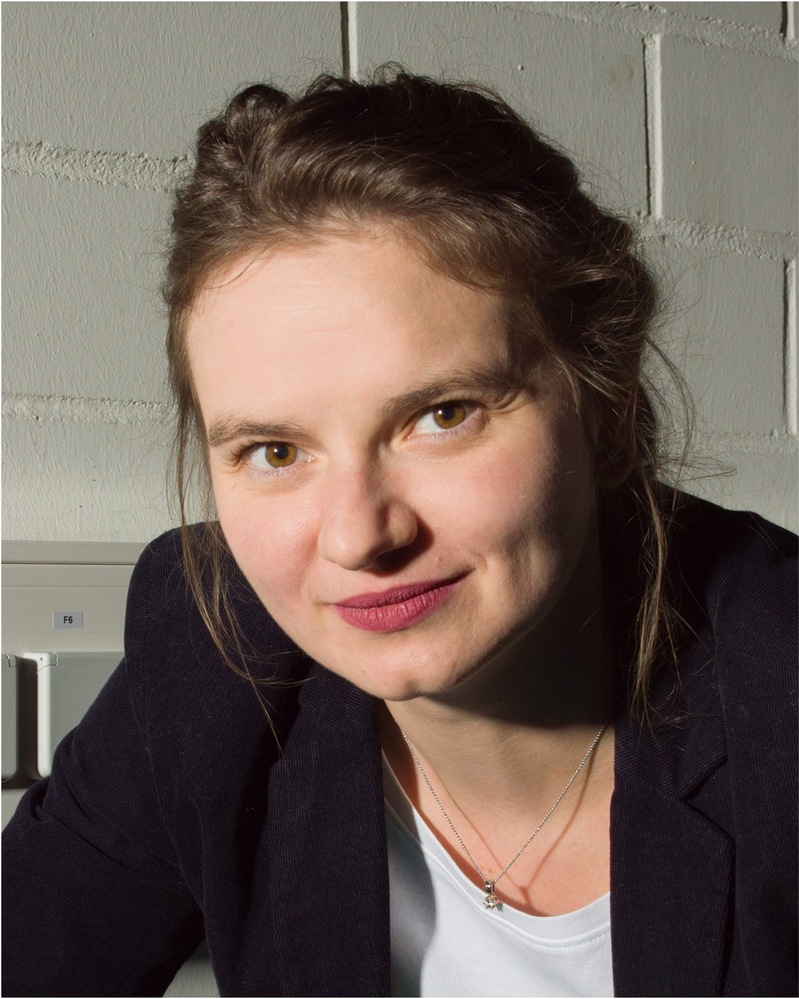
Prof. Dr. Anna Ermakova is a tenure-track Professor of Quantum Technology for Space Applications at Hasselt University and the Belgian Institute for Space Aeronomy (BIRA-IASB). Her research focuses on diamond-based quantum sensing at the interface of physics, chemistry, biology, and space science. In particular, she develops fluorescent nanodiamonds and diamond color centers as robust nanoscale probes for magnetic-field and temperature measurements in complex environments.
She received her PhD from Ulm University, where she developed nanodiamond-based quantum sensors for biological applications. She subsequently worked at Carinthian Tech Research in Austria and at the Max Planck Institute for Polymer Research in Germany. In 2022, she was awarded a highly competitive €1.5 million NEXUS grant from the Carl Zeiss Foundation, which supported her appointment as an independent group leader and the development of quantum-sensing approaches for biological and chemical systems.
Her current research aims to identify new applications of diamond-based quantum sensing beyond biomedicine, particularly in soft matter, space science, and environmental monitoring. She is also exploring the potential of highly sensitive, synchronized diamond-based magnetic sensors for future large-scale scientific infrastructures, including the Einstein Telescope. Her long-term goal is to translate quantum sensing methods into reliable tools for real-world applications in challenging environments.
Contact:Prof. Oleksandr Ivasenko (Sasha)